Feature: Mariel Lovelace of Best Ex Reflects on Post-Adolescent Authentic Femininity ahead of Her New Album Good Girl
Words by Angelina Singer
Former frontwoman Mariel Lovelace of pop punk band Candy Hearts is back on the scene, now with her own music pushing the boundaries of what it means to be a woman in this society. Stylized as Best Ex, her sound is sugary-sweet but with biting lyrics and bigger themes that will make you think. More specifically, she’s looking at the years that aren’t defined by the cutesy-teen articles or family culture — instead, it’s the time-between life phases where things are foggy at best and you’re not sure where you fit yet. Or perhaps the better question is — if you should even try to fit in at all.
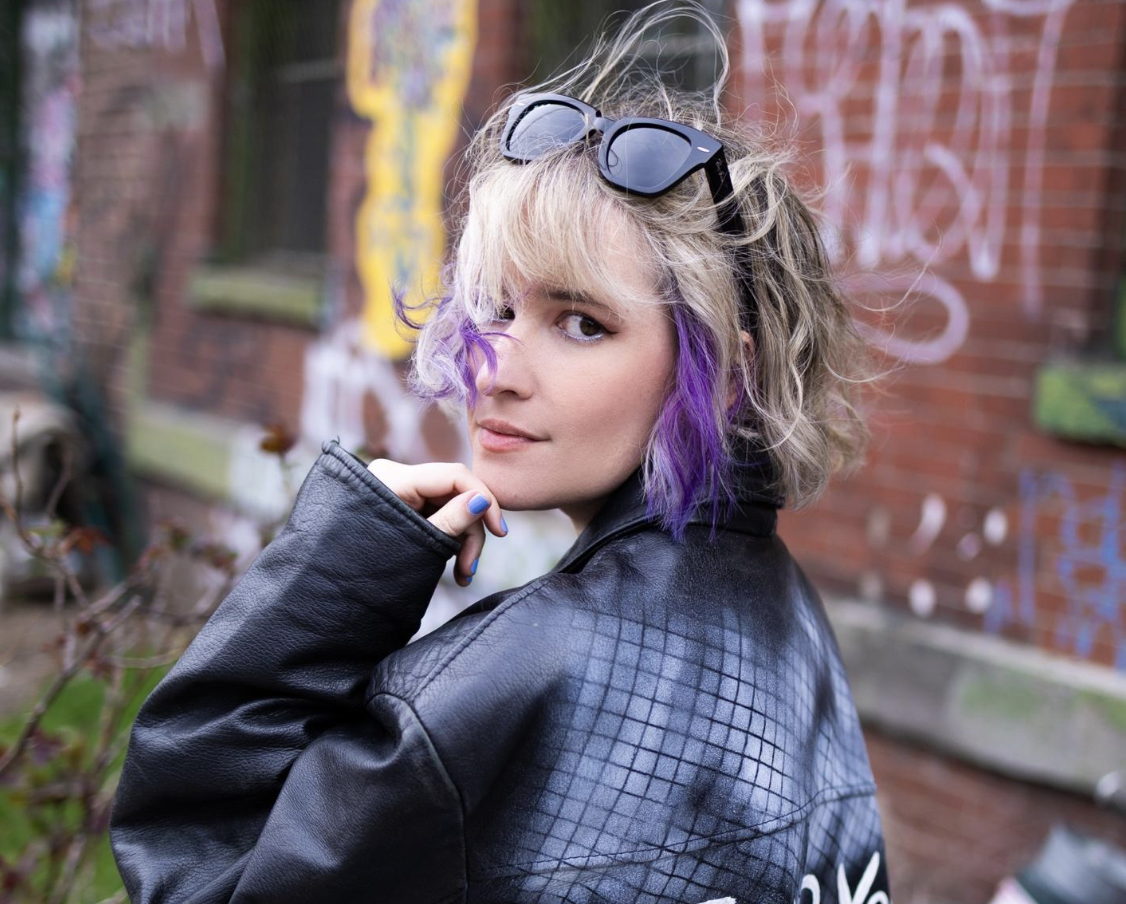
I was so drawn to her music because I too, feel that societal pressure to be whatever a typical late-twenties girl should be, but none of it seemed to fit me either. Mariel and I had a wonderful conversation discussing these struggles and so much more, so please read on if any of this sounds even just a little bit like you. Or better yet, read on even if it doesn’t — chances are, you’ll get a new perspective that will help you empathize with those of us still trying to carve out our own place in the world.
We started off talking about what it was like to be leading a band on Warped Tour, because that was part of her formative experiences with the industry.
“Warped Tour was one of the coolest things, because I grew up always seeing that and that being like, the pinnacle of the festivals everyone wanted to go to when we were younger. So to have an opportunity to play that, we did it a couple years for regional dates, and then the whole thing in 2015. And it was really like living the dream. It was really hard, especially because we did it in a van. And that was really tiring, basically sleeping on top of all of our friends while we were driving to the next city overnight and stuff.”
Despite many other seasoned bands saying that traveling in a van would make them breakup, Mariel found it to be much more of a bonding experience, despite that they were “prepared for war” — but it really wasn’t that bad after all.
From there, I asked a bit about how she formulated her style for her own project (Best Ex) after Candy Hearts. But first, she shared more about her previous band.
“When I started Candy Hearts, I wasn’t really sure what I wanted to do. I was 18, 19 years old. And I was just kind of figuring out how I wanted to incorporate all of the music that I liked into a project. We had many false starts throughout college. Then my senior year of college, we really got to where I had a vision for the band. And it was like pop punk, that’s what we were listening to. We were listening to a lot of The Thermals and more of that sort of indie-punk realm of stuff. And we started touring while I was still in college, and that’s where we found this east coast scene of other punk music that I didn’t really know existed, because my only experience really was the more mainstream sort of Warped Tour stuff. So when I discovered that, it just sort of felt like home to me. So I just kept going in that direction…”
This is where we got into some really interesting topics about what this industry is like to women, which is, well, no super nice. Not only is it male-dominated, but there’s also some bad attitudes about women trying to make it in their own styles.
“I remember when I was younger, it was kind of the nerds and the dweebs who were making the music. And by the time I was older, it was really the jocks and the people who were very sort of misogynistic and not my vibe… So when I was formulating what I wanted to do with my solo project, I just thought, I don’t want to be pigeon-holed. Like everyone expected another Candy Hearts record that sounded very much in that Warped Tour world — which wasn’t necessarily something that I wanted to make. Doing the solo project felt a lot more freeing, so I thought ‘What would Candy Hearts make if there were no restraints?’”
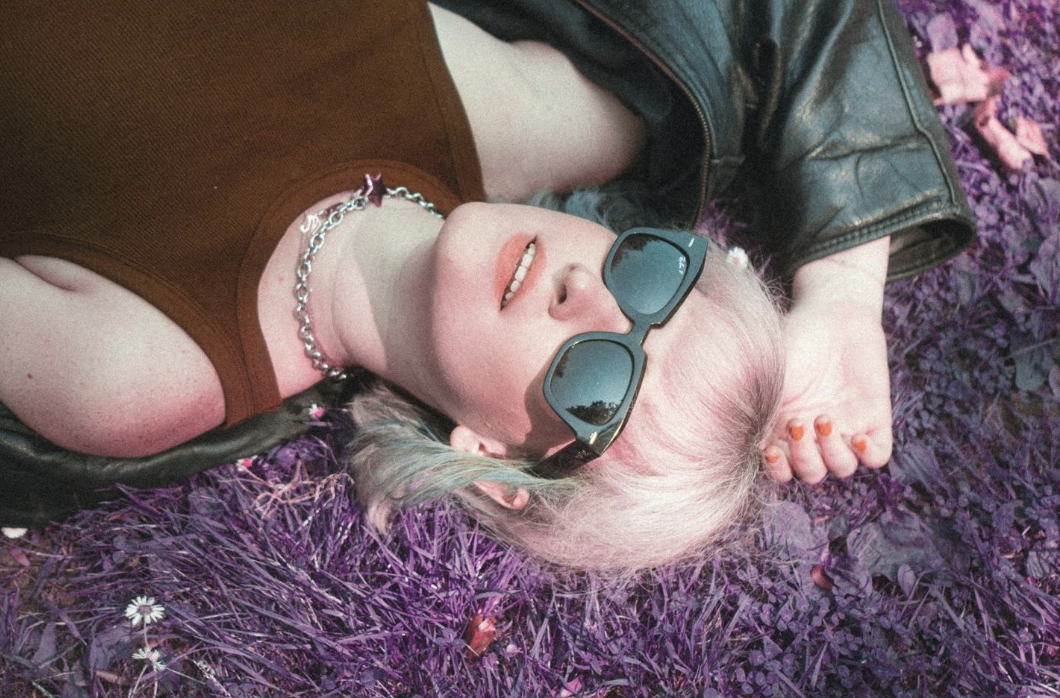
Photo by Alps Lifee
She really emphasized that her new project “Best Ex” feels like her dream mix of punk, indiepop, and all the things she wished she could have done with her previous band. And now, it’s getting back to her roots with guitars and distortion, but still closer to the heart of what she was originally doing — with a focus on a bit more of the singer-songwriter style but with plenty of angst. Candy Hearts disbanded on great terms, for what it’s worth — at the time, they were just ready for something different after things were naturally losing steam.
With all of this in mind, her music is all about what it’s like to question the narratives that society gives women, and what a better approach might look like instead. So I asked her more about her point that women are rarely defined by who they are — it’s usually all about who they belong to. Which, when you think about it, is infuriatingly true.
“I think with that one, I was just really, when you read the news lately, with what the administration encourages… it’s been a lot of overt misogyny that’s been allowed in mainstream media… it’s always reported as ‘pregnant women’ as opposed to their name or who they are. And when you look at all the true crime stuff — I watch a lot of true crime. It’s always people reporting, ‘Oh, she was someone’s mother, and someone’s daughter.’ There’s no reason to care about her if she doesn’t belong to someone.”
This is such an impactful point that I can honestly say I hadn’t considered quite from that point of view before — the idea that the names and titles we give people (in this case, women), can severely limit how we view them, and therefore, how we treat them in society. So I really appreciated her sharing this perspective behind the music that she’s sharing on her new album. And to expand on this, she offered me a real industry example of misogyny that she faced while trying to build her career in Candy Hearts.
“This is finally going to be the time I get a manager — like, a real manager of my own… And, I was so excited and he sat me down, and he was like ‘Okay, this was really great. But before I figure out what I want to do, I just need to know, do you have kids, or do you plan on having kids, because I can’t work with artists who have children.’ And I was like, so young. My first instinct was, ‘Do I look like a teen mom?’ And also, my second instinct was, how am I supposed to know if you’re my manager, what if I plan to have kids when I’m older? Like does that mean you could never work with me? I knew he represented men who had kids, and when I looked offended, he was just like ‘Oh, it’s just company policy.’ I felt like I already belonged to this child who did not exist, that may never exist.”
I have no idea how my face looked on the videochat call when she told me this story, but I just remember listening to her recount this painful experience, and wonder if there were ever lawyers getting involved for such blatant sexism in the professional realm. But then again, that would imply that the damaging culture around this doesn’t exist — but it does. And the older I get, the more I’ve seen and experienced similarly painful things.
“It has statistically been shown that women of childbearing age are punished monetarily and with promotions and stuff, just based on the fact that they could have children — not even that they do. So it’s just one of those things that is really unfortunate. And by the way, men are allowed to have like the freakin’ Nick Cannon, 95 children, and nobody cares.”
In my opinion, this probably comes down to the unfortunate cultural bias of women being the predominant caretakers, even though oftentimes, men take care of the kids instead. As I said to Mariel, I was retroactively upset for her being sold this ridiculous drivel, but I’m glad she’s managed to make something beautiful out of it — which is where we find ourselves with Best Ex. Next, I asked her what her biggest struggle has been, with writing the album.
“I actually don’t feel like this album was a struggle at all. The biggest struggle is finding the money to afford all of the stuff I wanna do. Every song cost money. Every piece of art — even if I make the art all on my own, which I do, the promotion cost money. Every little step of the way is more money. And it’s really hard to enact a vision within the constraints of having an indie artist budget. Like, I’m self-funding the entire project. I have a label who’s handling all the vinyl and stuff like that, but for the rest of it, for the making of the songs and the videos and the art, it’s really just whatever I can pull together on my own... Creatively, I don’t feel like it was that hard. I feel like it came together sort of naturally.”
As for her creative approach?
“I release an album, I do the touring, and the shows and the content, and then I start thinking maybe it’s time to start writing something new. For this one, my friend who produced the last album… I saw him in a bar, and he was like ‘If you wanna try something, I’d be down.’”
She later explained that she “snowballed forward” and had enough for an album before she knew it. I would think things flow a lot smoother when there’s less pressure to complete a certain amount of content — that’s something I relate to as an author as well.
Next, I asked her more about what got her into music originally, and what her musical influences would be.
“I honestly loved music from when I was a little kid. I loved the Disney movies and stuff that had a lot of music in them. When I was little, I would always listen to the Beatles with my parents, I would always listen to the Beach Boys, and I just loved stuff like that. Then when I got a little older but was still a kid, I heard the really great ‘90s artists, like Alanis Morissette, those kinds of things. And the pop punk artists like Blink-182, and it really opened my mind. ‘I absolutely love this, I hope one day a boy writes a song about me like that.’ And it never occurred to me to do it myself until I was in high school and I started listening to Bright Eyes… it’s just a guy with a guitar, and he wrote these beautiful words, and it was just him, and whoever would play with him… he’s not technically the most talented at any of these things, except he’s a songwriter and a poet, so if he could do that, maybe I could try to just do it on my own… maybe I could just be good enough to get my story across.”
Her humility really stuck out to me, because I think her perspective makes music a lot more accessible to anyone who wants to try it out. Mariel is a big supporter of people doing cool things just because they want to, not because they expect to be good at it right away (or, even at all). She also talked more about being inspired by Olivia Rodrigo’s iPhone commercial and just trying to make something cool with what she already has on hand. In my opinion, this process has created a whimsical and quirky style that’s totally her own.
“What you need, primarily — the hardest part, is the vision. And if you have the vision, you can figure out how to get there, with whatever’s around you. But you need to have the vision first.”
And her vision comes through so strongly! For example, I mentioned to her that I love the lyric, “cellophane pageant queen” in “Sick of Myself”, because there’s so much in that to unpack.
“That was one of my favorite lines. I had written that song, except for the bridge, the majority of the song over zoom with Andy Tongren who produced the album. And I had the lyrics originally, for the rest of the song… the verses, from this sort of like, quirky, waltzy piano ballad I’d written. But I didn’t wanna make that kind of music anymore. But I really liked the lyrics and I liked the idea, so we adapted it to that. And then, when I was in my vocal studio… I gotta nail down the bridge, because we’d written the song but we hadn’t written the bridge… I had all these other lyrics… it just came to me. I was thinking of what could I think of that’s that feeling of everything thinking that you’re this fraud. That you put on this great exterior — I go on the Internet and I put on all this makeup, my outfits, and I try to look really cool. I don’t know if I achieve that, which is what the song is about.”
She shared how even her mom pointed out, that if people only know her from the Internet, then they really don’t know her at all. And Mariel was wondering if people can still see the real her through it all, “The nerd who’s playing video games at night with her high school friends and not leaving the house.”
Mariel continues on to say that she’s somewhat authentic online, but that she comes off as more confident and showy. But in real life, she’s more “quiet and nervous”.
“I just get so nervous about saying something stupid… my main fear is just being misunderstood. I feel like it’s really easy to misunderstand people, especially in this age of the Internet, where people aren’t really paying attention, and they hear half of something, or hear something from someone else, and it’s like an internet game of telephone. And I usually come at things with the best of intentions… but that song is really about how maybe that’s not what people see.”
This is something I relate to all too well, and it was so comforting to commiserate with Mariel about this issue. Next, we moved to her song “Living in Hell” — the provocative title alone caught my eye, and I wanted to know if there was a story of some kind behind it. I also drew the connection between this song and “Parallel Lines” being perhaps the more accepting alter ego between the two tracks.
“‘Living in Hell’ is, you know, a lot of the people who have really hurt my feelings in my life, have really made a huge effort to make my life difficult and miserable. Those people, the instinct that you have when people hurt you like that, intentionally — because people do stuff, right? And they don’t always mean it. Like it’s a misunderstanding. 90% — even more than 90%, I feel like of arguments, or hurt feelings, are down to misunderstandings. But there’s that small percentage where someone just freaking sucks. And they’re a bad person, and I had encountered a very small number of those people in my life. And for the most part, the instinct in the beginning, is… I wanna destroy them, I wanna humiliate them. I wanna ruin their life the way they ruined mine. When you step back from that feeling, it’s kind of like the realization that I have my entire life ahead of me, and this person who felt a need to do that, is obviously just a miserable person.”
There’s so much wisdom in this idea, that “you don’t need to ruin their life because they already do it for free.” What she’s saying though, is that they’re doing it themselves. It’s all about being the bigger person, but with the awareness to zoom out and see that wasting energy on this kind of person is not only not worth it, but it’s also futile.
“The stuff I was trying to call them out on, is actually who they are, despite everyone saying it is not.”
This is such a valuable life lesson, and I really valued the creativity that she exhibits through her work, and her fearlessness with her lyrics.
As we finished up, I mentioned how her song “Parallel Lines” seems to address this issue from a different, more tolerant angle.
“‘Parallel Lines’ I wrote about, not actually about anyone that I really dislike. But just about how even if you are in relationships and you break up or whatever… sometimes it’s just not meant to be, and your lives aren’t going in the same direction. And as you grow up, you lose people, whether it’s because they’ve moved away, or because their lives aren’t moving [in] the same direction as yours, or because they died — which is an unfortunate thing that I also had to deal with…”
She went on to say that it’s great to get to cheer on people from a distance, even if you wish you were experiencing life with them again. Mariel brought up a great example from her old boyfriend who was touring in Japan, and how he was a great person and she wished she got the opportunity to tour in Japan. But that she also learned how to celebrate that connection from afar, and let them go in peace if that’s where life has taken you.
As we finished up, we chatted about the mythological themes she touched on in her music, including her song “Eurydice” and Babylon, and how she came about choosing those references.
“The story of Eurydice, and Orpheus… the whole deal is that Orpheus is this musician who was married to Eurydice, and Eurydice dies because she gets bitten by a snake or whatever. And she goes to the Underworld with Hades, and Orpheus is so heartbroken that he writes this song that’s so beautiful, and plays it for Hades to convince him to give back his wife… and he says ‘Sure, that song’s so beautiful, I’ll allow it, but the only caveat is, you can go down to Hell and get her, but when you bring her back, you can’t look at what’s going on behind you. You have to keep walking forward.’ And he got nervous because she was behind him the whole way, like he couldn’t hear her… he turned around to look at her, and she was doomed to a life of eternal hell, because those were the terms of the deal. I was thinking about all these beautiful love stories that exist in the world of these historic kinds of love. And how I never would have been damned to Hell, because the person I wrote it about wouldn’t have cared enough to turn around and look at me.”
This reminded me of the biblical story of Lot’s wife being turned to salt, to which Mariel mentioned having gone to Catholic school but not being familiar with the story I referenced. But it was interesting to see how Greek mythology crosses over so interestingly with stories in other traditions. In this song, she also referenced Aphrodite leaving Olympus to be with a mortal, etcetera. I really enjoyed these interesting connections with her creative storytelling in this album.
Any advice for her listeners?
“I think the advice that I would give people is to just open your neural pathway to writing. Once you get the idea, like you want to write a song, start just trying — even if it’s bad. If you start just trying… it will come to you. You just have to keep doing it.”
Before signing off, I asked Mariel what she would like people to take away from this album, because there’s so much to it.
“I think the whole message behind the album is, really, I just hope it represents life for people in their thirties, because I know there’s so many pop songs written from the perspective of being in your twenties and being in that young, free life stage — especially from younger women. And you don’t have a lot of older voices like you did back in the days of like, Dolly Parton, and Loretta Lynn, and those older storytelling voices. And I just want to be able to represent feelings that people deserve to have songs written about, that maybe are not always touched upon.”
You can listen to Good Girl by Best Ex on November 6th, but in the meantime, listen to other music by Mariel Lovelace on her Spotify page here!