Feature: Reflecting on the Highs and Lows of Life with Lø Spirit
Words by Angelina Singer
From humble beginnings as @sadsongsonly on TikTok, all the way to playing on the Warped Tour Stage this upcoming year, Joshua Landry is far too humble when he’s talking about his accomplishments. Now, he’s amassed over a million followers on TikTok, in addition to hitting #1 three times as a songwriter for artists like Papa Roach and Funeral Portrait, and is about to release his own debut album — Isn’t Life Beautiful. I first came across his immaculate punk music while mindlessly scrolling on Instagram, when the emo side of my algorithm dropped his cover of “Running Up That Hill” (in the style of My Chemical Romance) onto my radar. I got the chance to talk to him about his first directing project, how living with chronic illness has shaped his writing, and some juicy tidbits about what inspired the romantic context of a couple of his songs.
First things first, I wanted to ask him about his artist name and branding for his overall project. Obviously, the name Lø Spirit is as unique as the artist, so I knew there had to be something intriguing to unpack there.
“So… I wanted to go by Gløøm, and then I think it was taken. At the time I was diving for synonyms, and hilariously enough, low spirits (with an “s” at the end) was there, so it was kind of like a happy accident. But really, it was rooted in what I was going through at the time, which was a lot of self-discovery through therapy after going through a lot of things. I got chronically ill at the time, [and] didn’t realize it or have answers for years… it was a really difficult time in my life. So I kinda wanted something that felt like a character I could be that sort of spoke to that time in my life.”
From there, I asked Joshua if he plays any instruments — obviously, he’s got an affinity for music, but I wasn’t sure if that extended beyond just the producing side. And of course, he’s a multi-instrumentalist, with a lot of life experience to back it up.
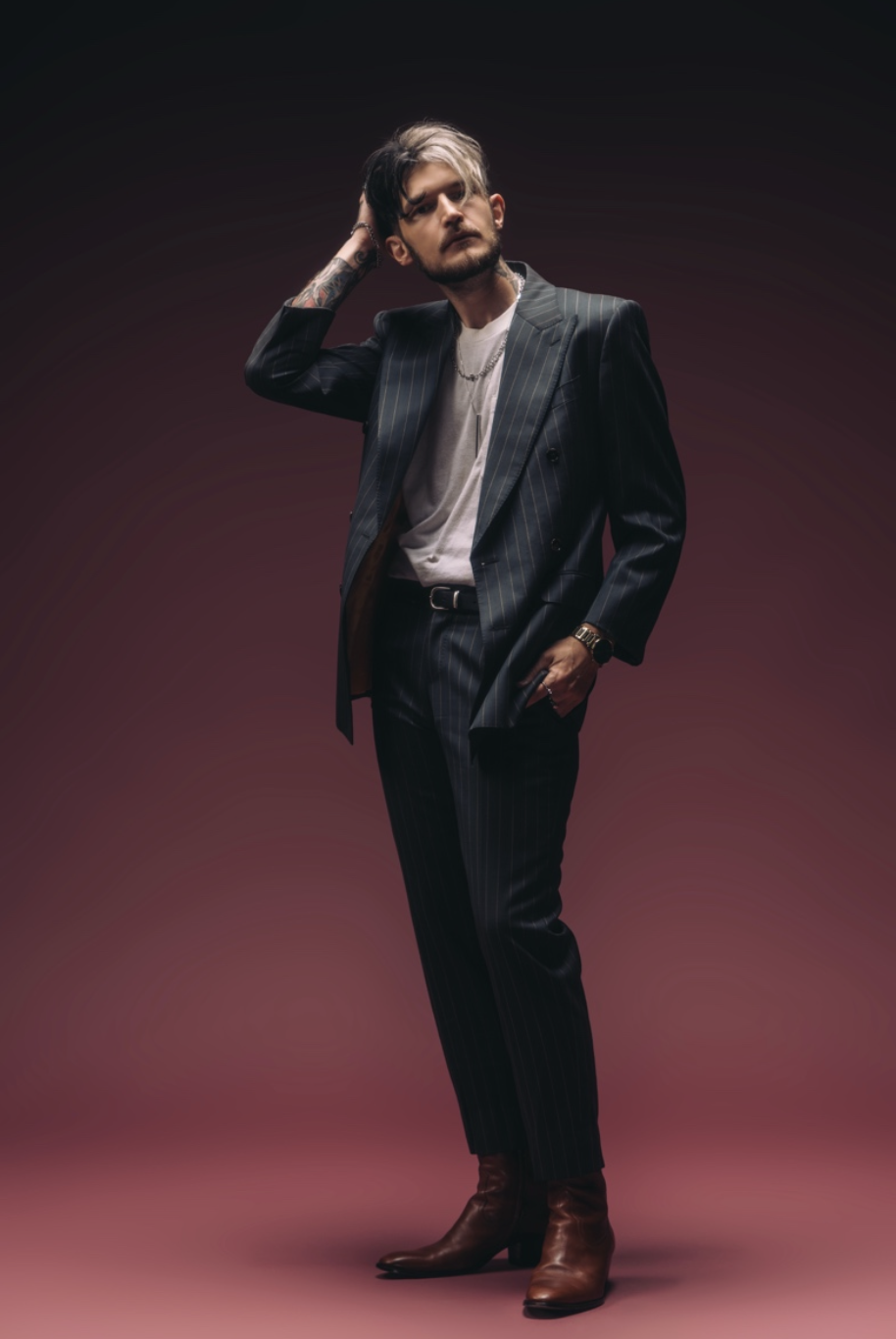
“Yes, so funny enough, I started playing music when I was twelve, and it was guitar but I only picked it up for about a year, year and a half. My family is from New Orleans originally, and at the time, we had gone through [hurricane] Katrina, and I was about eleven years old. So I got into music like the year after that, when our neighbor gave us this guitar that was just sitting in their attic. And so I picked it up from there, and then when I started going to school there, when we found out we weren’t going back home (because we had lost our home and everything), the first friend that I made, his name was Greg and he played drums. His dad was in this cover band and his family was super musical. I played drums for ten, eleven years, actually until I was about 24... I play a bit of everything, but my first real love in music was drums.”
After his instrumental skills were developed over the course of his younger coming-of-age years, Joshua naturally fell into directing more recently, born out of a logistical need that allowed him to stretch his creativity in new directions. This new horizon of directing is on full-display in his newest music video for his song, “It’s You” on the soon-to-be-released album Isn’t Life Beautiful.
“Basically… we had a budget that we had set aside for music videos and doing promo and stuff like that. And one of my favorite songs on the album was “Alone”, which was the first single that we put out. So I spent the majority of my budget on making that video, and hiring an amazing team. I was so happy to work with them on that. But I did it for a song that didn’t immediately land or connect with my audience. So by the time I had a song that I put a feeler out for and it had a crazy response, I was like ‘damn, I don’t have any money to make the video that I wanted to make…’ Now I had to figure out how to make something that I’m excited about that still speaks to the song contextually and also feels elevated as I’m about to put out my first album. It was up to me to direct it so I’d spent three weeks on Pinterest kind of looking at different references for metaphors and images… that told the story.”
He goes on to talk about how each scene had a particular idea attached to it, and just about everything you see in the video had a reason to be the way it was. The storyline of the song is all about a love interest that isn’t able to make up her mind, and yes — that component is 100% what’s driving the main message of the song. As great as the music is, the storyline is even better. So the symbolism in the music video is meant to illustrate this struggle, of being in love with someone who isn’t willing or able to be real with you.
“The broken mirror scenes, throughout the video, were basically like symbolic of my headspace at the time. I felt like I was too broken to be wanted by someone at the time. Everything in that video had intention… I wrote this about her [the love interest who inspired it], I sent it to her. But I didn’t tell her it was about her [then]… I [later] told her how I felt. She listened… it came to the point in the conversation where I said ‘you’re not gonna tell me how you feel, are you?’ And she was like, ‘no.’”
I think it’s safe to say that in this video, the contrasting colors and musical tension reflect the uncertainty of this complicated relationship. Joshua mentioned how “cringe-y” it was to put out this song knowing that his crush would see it after the fact, but there’s still something to be said about being brave enough to write (and produce) a song that’s so raw and loving despite the complicated dynamic it was born out of. All hear-say aside, this song is fantastic and if you even slightly relate, the lyrics and passion behind it will hit home, guaranteed.
After this portion of the conversation, we switched gears again to talk about the first song I’d heard off of this album, “XØ to the Grave”, which is a love letter to his child about knowing how much he is loved despite chronic illness potentially taking that away. In that context, I also wanted to know what the full album’s message was meant to be, in concert with this song and all the others.
“I got really sick about six years ago now. For about three of those years, I was going through what I now know is called presyncope convulsions, which basically is like going through a seizure that you’re conscious for. You lose control of your body, and other things. You can’t speak, really. It’s a terrifying thing to go through… I lost a lot of things in my life, because my lack of ability to feel comfortable focusing. I had a hard time working, because I was afraid of this thing that was on my shoulder, that I didn’t know what it was. It was just tearing apart my life. During that whole period of my life, I was just really, really, really depressed. I was pretty suicidal during that period of my life, and I was scared all the time.”
Joshua went on to say that he was producing records throughout that time, and had been doing that for a few years leading up to when things got more challenging with his health. Things were going well, and built a studio, and then he lost everything. He’s convinced now that the only reason things got better was because he sat down and made those short-and-sweet covers that we’ve all come to know and love.
“That sort of re-taught me how to sit through the anxiety and do my job and make music again. And so, those short covers turned into what people now know as me on TikTok and Instagram and stuff. It was me working through the scariest period of my life, and it was just trying to basically get myself back into the flow of being calm, working on things, and centering myself… and everyone was seeing that in real time through these short covers.”
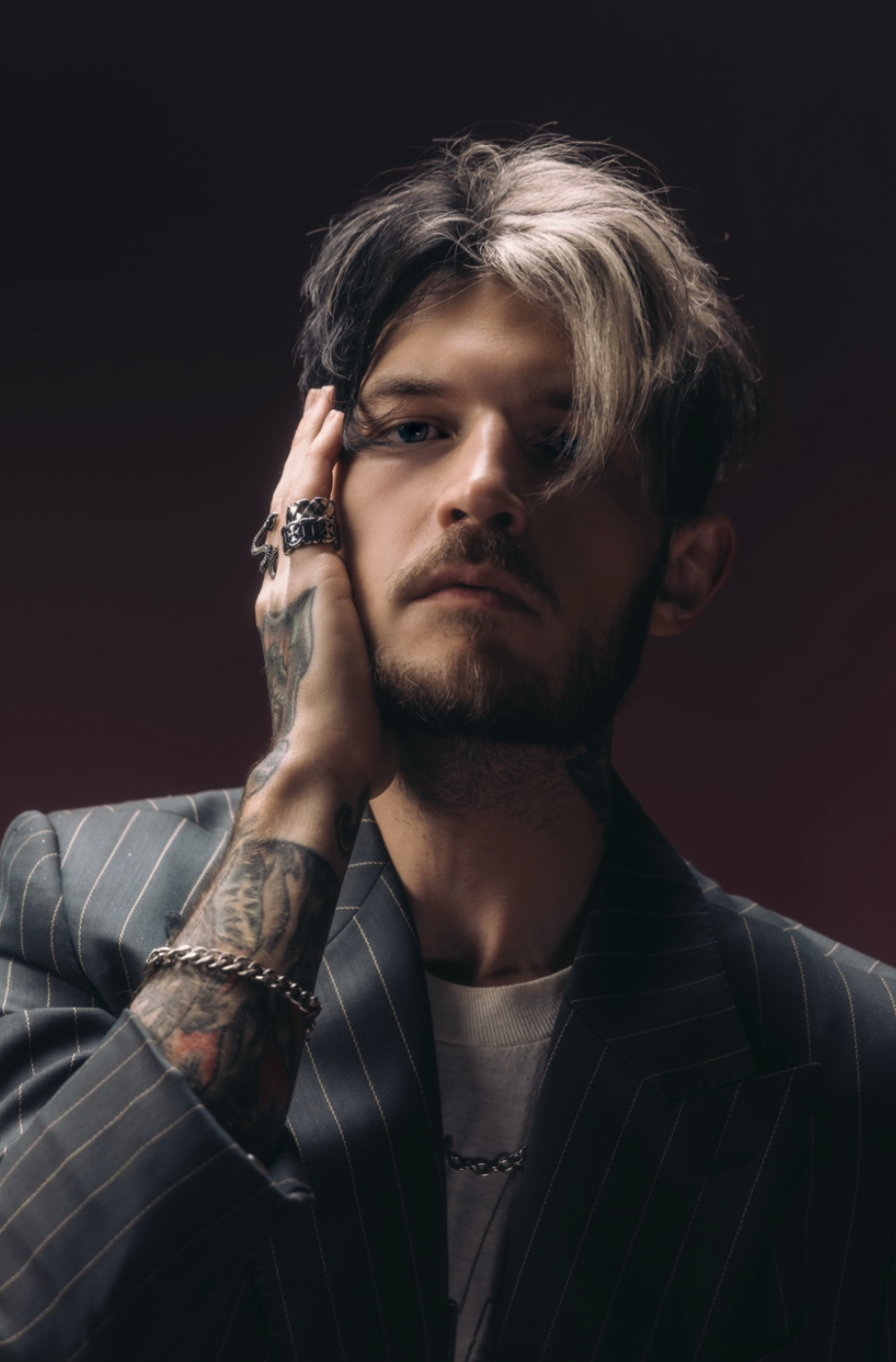
Best of all, Joshua recognizes that it was these struggles that brought him to where he is, and while these songs might seem angsty on the surface, there’s a deeply personal level of something surprisingly wholesome that comes out of them when you listen. After all, these songs helped him find his stride when the world seemed to be crumbling around him, as he explained more about.
“Most of the song choices that I picked were relevant to me on a lyrical level. And I would try to find a way to flip them and make people feel the same way I felt about those songs… All of that mess was so scary for me, and I didn’t think I would make it through that. But if I didn’t go through that, I wouldn’t be here in LA. I wouldn’t be so close and be having such an amazing life with my son. I wouldn’t have an artist career. All of it happened by accident.”
He continued on to say that this album is meant to be a photo album of all the difficult things he went through, and he wants to share that all of these things are what brought him to his best life. As we got towards the end of our conversation, I mentioned how much I enjoyed his rendition of “Running Up That Hill” in the style of Gerard Way of My Chemical Romance, and as it turns out, that was a band that inspired him from a very young age.
“My Chemical Romance was the first show I ever saw when I was 14 years old. I went to the Black Parade tour, where Muse was the opener, which was insane. That was the first time that I was like ‘I wanna make music for the rest of my life, like this is what I wanna do.’ When I saw that show, I was genuinely blown away.”
I suggested he should do some more My Chemical Romance covers, and as it turns out, he already has. So you’d better add those to your listening list, stat.
“I did one on the compilation for this record label called Ghost Killer Entertainment, and I did a ‘House of Wolves’ cover, from that album. So it’s still out there, it’s on Spotify — it’s just under my old TikTok name which was @sadsongsonly.”
We ended our conversation talking about Warped tour and his other accomplishments, because as humble as he is, there really is so much for him to be proud of. Before we wrapped things up, I wanted to ask a bit more about his creative process, and the way by which he’s able to take these strong emotions and turn them into something so viscerally powerful at such a large scale. And of course, ask a little more about that sweet song he wrote to his son, “XØ to the Grave”.
“So I was in my car, just doomscrolling on TikTok one day. And there was this video I came across, of this girl, who was talking about her father who passed away. She was kinda talking about how he was the most amazing dad, but he was such a chronically unhappy person. And that was the thing that she remembered the most about him. And I don’t know why that hit me so hard, but it did. Because I’m struggling with [chronic illness], I know other people see that on me a lot. And I know that my son experiences it sometimes, like when I’m having a rough day. It just made me emotional — the last thing I want him to remember me by, is being a chronically unhappy person. I want him to remember how much I loved him despite everything going on with me personally, and how much bigger that love for him was than anything else that I was dealing with.”
While the song itself sounds angsty on the surface, I absolutely loved the way he took that emotion and made it marketable to a larger audience while still keeping it aligned with the homespun message of familial love that was on his heart.
As we got to the end of our interview, one of my last questions was all about his songwriting process, and any advice he might have for someone wanting to get into the music industry.
“So what I love to do when I create songs, is I like to sit down and get to know… the singer. But not even thinking about the song at all, I just like hanging out for an hour or two, and literally just talk. Through those conversations, I usually find out what’s going on in their lives, what’s relevant to them, what matters. Something that’s bothering them in the moment that they’re venting about. Nine times out of ten, the song always spills out of that conversation, and I love doing that where it feels like going fishing. It’s like the same exact feeling. Where like I have no idea what I’m going to catch but I just cast my lure and see what grabs on, what comes out of the water. That’s exactly how it is for me, like I love having conversations with people…”
And of course, he reflected on the benefits of living in a social climate where there’s more potential to get noticed than ever before.
“We’re blessed to live in an era where we don’t have these gatekeepers anymore; it really is just the approval of the public. And that’s it. So it’s easier than ever to be seen or be discovered. But at the same time, I think a lot of people are making art for the sake of being seen, rather than making things that compel them and inspire them. I’m worried where that’s going to take music eventually. So I want to give the advice: Make things you genuinely believe in, because that’s how the culture was shaped, always… Make the stuff that matters.”
His final thoughts as we ended our interview, were simple, but no less important than the wisdom he shared above:
“One thing that I want people to know… for anyone listening and paying attention, thank you for being there and for listening and supporting me. In a lot of ways, you have completely saved and changed my life for the better, and I genuinely appreciate that so much. But I also want to take a moment to — maybe this seems conceited or selfish, but — I’m genuinely proud of myself for putting this album together, because there were so many points at which I didn’t feel like I could do it. And there were so many things I was too afraid to confront, because of how they might make other people feel. And that kind of became a problem where, pursuing art for me is about pushing through the things that are uncomfortable and writing about the things that genuinely matter the most — and not filtering myself for the sake of other people.”
One more bonus tidbit before we said goodbye? The person who inspired the song “I Want You” was the same person who inspired the song “It’s You”.
“She was one of the first people I met when I moved to Los Angeles three years ago,” Joshua explained. Now it all makes sense… that these two songs are two sides of the same coin, perfectly aligned for an unwilling audience of one — but I can say with full confidence, that anyone can enjoy this album. His muse is the beginning, and the end — and it’s this cyclical motion that keeps the album as fresh and universally relevant as it is.
Listen to Isn’t Life Beautiful, Lø Spirit’s debut album out NOW!
Also, watch Joshua’s self-directed video for “It’s You” HERE