Words by Angelina Singer
Andy Gruhin is used to being the guy on the other side of the desk — signing the next big artists to grace the music industry with their talents. But in the wake of losing his wife six months after their son was born, he found himself in an entirely different reality that sparked the desire to build the most amazing album he possibly could. Suddenly, the very art that he’d built a career around analyzing became his lifeline out of the harrowing reality of unimaginable loss.
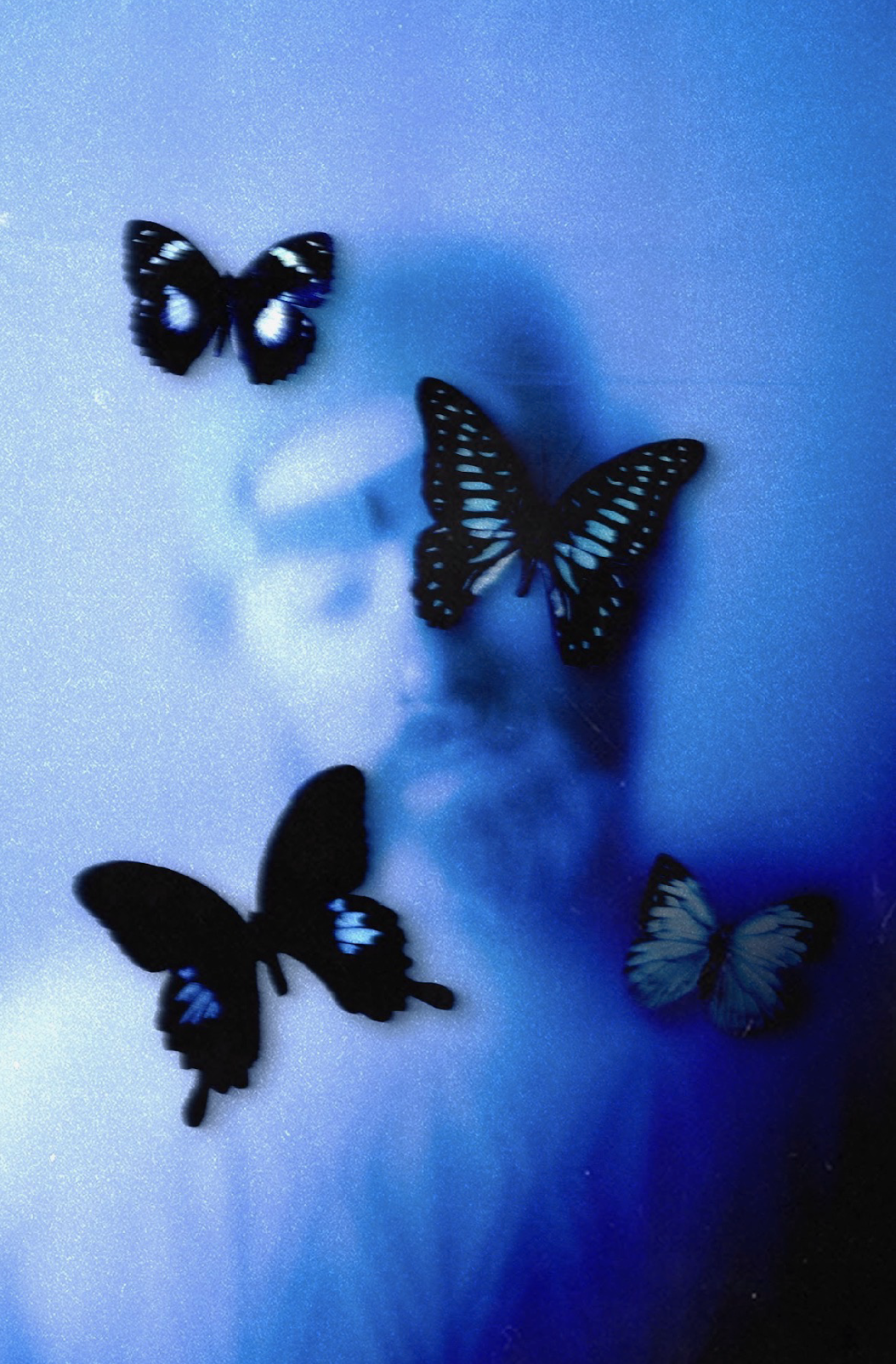
But the album was never meant to be about loss — that’s something Andy really emphasized to me during our conversation. Instead, it’s supposed to be a place where grief is allowed to morph into something else. Maybe hope, or maybe something on the way to hope. But this is not an album about grieving — it’s about life. And it’s a beautiful album, filled with so many metaphors and intriguing ideas that will make you want to listen more than once. From the butterflies that were literally clouding his vision while experiencing PTSD, to the way his wife loved sunflowers and those became a significant symbol of what this album seeks to represent, Hannah features a lot of heart and the classic emo-punk style that countless people will connect with. After all, it features other talented voices (like Aaron Gillespie from Underoath, Alejandro Arandha known as Scarypoolparty, and Eli Gibb).
We started out our conversation by first chatting about the top of the album, “Concrete”. I wanted to know more about this metaphor, and what inspired this song. While it’s not extensively about religion, Andy gave me a beautifully honest look about the struggles he’s had making sense of what happened to his family in context with his Jewish faith.
“Concrete is about my relationship with God and how it disappeared. That’s what I’m trying to say when I say ‘God doesn’t follow me,’ I’m trying to say that you can watch me live and do whatever I want, but there is no God [for me]. And that’s how I wanted to start the record because it felt — when Hannah died, there was a very clean break in the person I was before and the person I was after. Concrete is kind of my way of explaining the impactfulness (sic) of what came after.”
Obviously I was saddened to hear this crisis and tried to offer him some encouragement as a fellow person of faith, but I understood that’s there so much complexity to what he went through during the grieving process, and this this album could help so many people even in that struggle. I made sure to tell Andy this, as a genuine compliment. But surprisingly, he quickly let me know that this wasn’t his intention with the album at all.
“So many people listen to these songs and think I’m creating an ode to my late wife. And that’s not the case — that’s not what this album is about at all. It’s ironic that that’s the case, because that’s the case when you’re going through something like this. Like you don’t feel understood by anybody. And Hannah is just the catalyst of it all — that’s why I called it Hannah. The album is about everything that came after Hannah. What that event caused. I did not write this for anybody except myself.”
Ironically, I was really interested in this perspective. On the surface, some might call it self-serving, but I’d argue the opposite. Some of the best art, in my opinion, exists simply because someone wanted it to. And it doesn’t necessarily need to have a purpose beyond its creator.
“I just wanted to build something that I could pour everything that I was feeling at the time into something. Because if I didn’t, I was gonna die. I was gonna implode, one or the other. So that’s what this is, this was a place I put my grief, a conversation with myself — except for ‘Bobby’, except for that song.”
Despite the beauty and the deep emotion that I personally found in these songs, Andy also made it clear that he wants to remain very humble in how people perceive him: “I don’t want anyone to think that I’m like a healer, because I’m not. Or that I’m wise, or like a sage, or that I have good advice for anyone — because I don’t.”
I’m pretty sure this is the first time I’ve ever heard this level of humility in an interview — seriously, there was something really uniquely special about this regular guy sharing his experiences with me. Instead of putting him on some pedestal (which is probably the last thing he wants), Andy wants to be seen as a regular human being who made an album, that you could listen to — or not. Honestly, I think he’s just glad this album exists, whether or not you like it (but I promise you, that you absolutely will). After all, what’s more punk rock than making something for the sake of making it, without any care if people actually like it or not? It’s refreshing, to say the least.
“The expectation of music has become simultaneously religion and politics and medicine and therapy and… there’s so much expectation. When in reality, my personal opinion? Music is communication — that’s it. You’re just trying to say something. I think that’s maybe all of art, and all of history, since we’ve been beatin’ drums, that’s what it is. It’s communication. And what I’m communicating, is I’m not asking for answers. I don’t need answers. In a way, I need witnesses. When you’re grieving, you need witnesses more than you need answers.”
Communication, that’s a good point. I’d honestly never really connected it that way. But at the end of the day, Andy went on to say that obsessing over branding and content really strips away the inherent purpose of making art in the first place, which really is, to be seen.
“When I made this, I originally had no intention of even putting it out. I did this [for myself]. And it was really expensive to do it. I got a lot of life insurance money, and I was experiencing extreme complex PTSD, and I was hallucinating and experiencing psychosis. The value of money meant nothing to me. So if I’m gonna make something, I’m gonna make it insane.”
That alone, makes me hope that this album goes far. It’s something that Andy poured his heart and soul into, and I still think a lot of people will connect with it — even though he doesn’t care about that, I think it would be really encouraging for him to see.
“For the longest time, I thought it was about Hannah. But it is not — it is not about Hannah. Because it’s about me, and what I mean by that is… everyone experiences death. But when something like this out of nowhere — this happened out of nowhere. Like, we were together for eight, nine years — she had cancer the whole time. We didn’t know, out of f***in’ nowhere. And so she just disappeared, your whole life shifts… the surviving one, starts to disappear incrementally over time. And I felt that deeply… This album, I’ve come to realize, is me screaming into the ether, hoping someone will realize that I still exist.”
This really helped me better understand where he was coming from. After all, this album may sound pretty, but it’s also a rallying cry born out of pure, unadulterated rage and sadness that there probably aren’t even adequate words to describe in this article. So that’s why, from here on out, I tried to let his music do the talking, and I asked more about the actual songs that came out of this very dark chapter in his life. I also wanted to know more about how he stumbled upon his emo punk style.
“I was brought into the industry at a very young age. I got a publishing deal with Sony when I was either in my late teens or early twenties. I was a drug addict, I was not prepared for this shit. I had no concept of anything. And the things they were throwing at me, I didn’t have the chops to do any of this. But at that time, for seventeen years, people have always called me an emo artist. Ultimately, I stopped making music to make money for my family that I was planning on having, like, I’m engaged now, so I’m back in that thing, trying to make money for the family that I have now. But initially, all of my music kind of sounded that way. I always considered myself to be a singer songwriter, ‘cause I grew up on Springsteen… My favorite band of all time is Say Anything. When I found Say Anything, that changed everything for me…”
I enjoyed hearing about his musical journey of course, but Andy said something that really resonated with me that I wanted to make sure made it into this article:
“The purest human emotion, like the rawest one, is angst. It’s not anger or sadness, I think it’s angst. I say that because angst is very childish. And that’s why I find a lot of artists that make this type of music is performative — because they’re acting like children. But they’re misconceiving what emo music is.”
This was honestly a really interesting idea, and I liked the way he presented it beyond the trendy idea of just being edgy — at its core, he explained that it’s this childhood feeling that appeals to our sense of nostalgia for a simpler time — and that’s what emo music is. Wishing something was different from our childhood, or reliving our best childhood memories, is a universal experience that emo music provides the vehicle for.
“The thing that I think makes emo music special is that if it’s done correctly, it is raw. It hits you in the same way that hardcore hits you. It hits you in the same way that a really emotionally ballad hits you — just in a different way. In a more energetic, aggressive way. Anything beyond that, performative, like — people really don’t think lyrics are important anymore. Like, anything in that realm, I think it’s funny. I don’t listen to it, but I get why kids think that’s the real thing. But it’s not the real thing… [Lyrics are] the only thing where I would say I’m good at music at. The only talent that I have is my ability to be honest in my lyrics… everything else, I am very average. But in terms of what I have to say, the musical tradition that resonates with me is telling the truth. Which goes back to my idea before like, it’s all about storytelling.”
One of my favorite things about this interview, is that it changed how I saw both the music industry as a whole, as well as how I saw the emo punk genre. There’s more than what meets the eye, and Andy is really good at explaining not only his opinions, but his smart reasons for the opinions, with the same amount of confidence no matter who agrees with him or not.
From here, we shifted gears to talk about how it was working with the talented artists he brought onto the project.
“I’ve been following Alejandro since he had like, way before American Idol. Like he might’ve had like 600 followers at the time. Like I just saw this kid doing the craziest riffs I’ve ever seen in my life and I was like, ‘what is this.’ Then I saw him on American Idol and I was like ‘oh my god he’s gonna win American Idol.’ And he almost did! But the way I actually met Alejandro, was I signed him…”
This shocked me, just because once again, the humility is at the forefront. So Andy signed Alejandro, and if you’ve ever seen Alejandro on the show or listened to his music, you’ll understand what Andy was talking about with his otherworldly artistic skill.
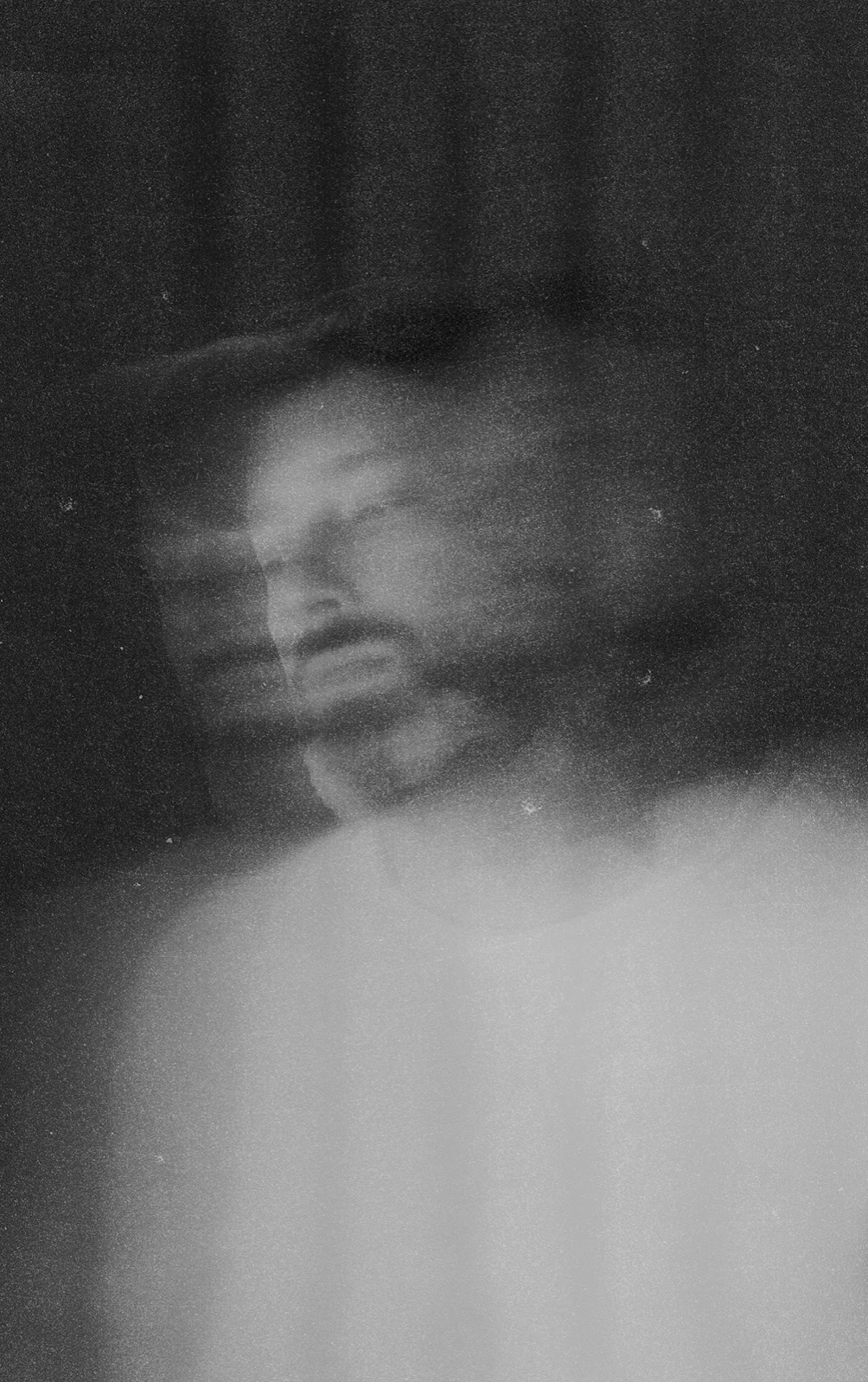
“I think he [Alejandro Arandha] is the most underrated artist alive, in my personal opinion. I’ve never encountered someone that is that humble and that soft-spoken but can literally rip every single instrument and sing beautifully and play every type of genre you could imagine. He just doesn’t make sense to me. We’ve become friends, and when I realized that I should probably write a song for Bobby — because Bobby’s my son and is a part of the story — I wanted to make it a song for him. And I was like, ‘I cannot mess this up at all,’ I needed to find the most talented person that I know. And I hit up Alejandro. It just was easy.
With Aaron [Gillespie]… I’m very good friends with Taylor Larson who’s been an amazing friend to me and he’s a very well-known engineer and producer. And he mixed this whole record, and he also has done a lot of stuff with Underoath, and Aaron — he introduced me to Aaron and when Aaron was down to be part of the record, what am I gonna say, ‘No?’ No to one of my childhood heroes?”
I’m so glad that Andy got the opportunity to work with these two amazing artists, and they were really happy to stay focused on exactly what Andy wanted. He was so grateful that they were both so collaborative in a way that made him confident that his album was in good hands.
“Please don’t forget the other features on the record. Arnie Woods, he’s insanely talented. There’s this really big band Congress — they’re poppin’ up, they’re from like North Carolina, he just produced a lot of songs on their records, he was like a really big producer in hip hop for like Designer and stuff like that. But he’s done vocals for like Ray Volpe in the dubstep world, but like he’s one of my best friends. And he knew Hannah, and he helped me. Arnie Woods — I call him Clay, but that’s his artist name. Clay helped me write “Concrete,” “PTSD”, “Fear of Flying” — Clay helped me write a bunch of these songs, because he was there when I was on the floor in this room not wanting to exist. He really pushed these songs out of me.
“And then Eli [Gibbs], on “Turn to Stone,” you can hear his voice, he’s got the voice of a f***in’ angel. I met him through Taylor [Larson] and I asked Taylor, like ‘Who’s the best vocalist you know?’ And he was like, ‘Probably this dude.’ And you know, not a huge artist, but he’s like, if he wanted to be a huge country star, I have no doubt in my mind that he could do it. So I just wanted to also highlight those guys. And Bobby Raps and I were working on something for the record — he’s one of my favorite artists and producers… timing didn’t work out. But we were talking about doing a song together in the future which would be really cool…”
After that great lowdown on each of the specially curated artists that were somewhat involved in different capacities with this album, I wanted to dig a little deeper with a broad-stroke brush and find out what Andy wants people to take away from this album. There’s so much that went into it, and even though it was written purely for himself, I wanted to get the chance to see what’s floating to the surface as he prepares to share it with the world.
“That’s a very good question. There definitely is a message behind this record. And it’s a weird kind of message. I’m not giving advice to anybody, I’m not saying anything to anybody. It’s merely just a record of a really sad person going through a really hard time that wants people to know that he still exists and he’s not disappearing. And that’s it.”
I for one, can tell that Andy has a big heart and has so much talent to share with the world (even if he denies it). There’s something a bit refreshing about the anti-hero attitude, the idea that you might just save the world by accident, and that you didn’t know what you were doing but things somehow came together anyway. That’s the vibe I got from chatting with Andy, that despite the intentional attention to detail in this album, it wasn’t something he set out to do in the way that you would think — yet somehow, it all came together exactly the way it was meant to.
One of the songs that resonated with me on the album was “Fear of Flying,” and in our last few minutes on the zoom chat, I wanted to know what inspired it thematically.
“‘Fear of Flying’ is about… when you don’t give a shit about anything, it’s easy to not have a fear of going on airplanes. When you have things to lose, all of a sudden, you’re afraid of flying. And that’s kind of how I was feeling at the time, I had this reckless behavior in me. And I was also having these recurring nightmares for months. So I wanted to write a song about those recurring nightmares that I had. So I meshed it all together, and lyrically that song is basically like ‘I’m trying to move forward, but I keep stopping myself. Like I’m afraid. I’ve been so attached to all of this shit that I’m afraid to move forward because then who the f**k am I?’”
Oh, and there’s one last cool detail about the cover art I think you should know, that Andy took the time to share with me:
“So Chadwick [McCaleb] — the two guys doing my art, which goes back into trying to make this the craziest record ever, the two guys… Chadwick’s like [a], legendary graphic designer, works with the Rolling Stones, he’s done stuff on the Sphere in Vegas… all of Morgan Wallen’s stuff, just great guy. And through him I met Duong Nguyen, and he’s the calligrapher behind…. so many iconic records. We’d become friends over the years and I’ve approached him… and he was like ‘What? Okay, yeah, sure.’ When I was like losing my mind, I remember calling him and being like “Hey dude, I need you to do something for me.” I asked him to turn Hannah’s handwriting into a font. So I sent him a bunch of images of cards that she wrote me, and all of the type on all of the art, that’s Hannah’s handwriting… The butterflies, and that whole thing, the sunflowers… are Hannah’s favorite flower.”
Having done my fair share of interviews with artists, I can honestly say that this conversation really made me think. It was insightful, practical, and really helped me view the entire music industry in a whole new way.
If this conversation resonated with you (or heck, I’ll take a note out of Andy’s book and say, even if it didn’t), please listen to this album. There’s more to it than just a sad person talking about his experiences. Even in the darkness, even in the pain, what Andy forgot to talk about, is that little sliver of light that sneaks in through the cracks, and if you pay close enough attention, you just might catch a glimpse of it.
Andy Gruhin’s debut album Hannah will be available September 18th, but you can listen to his music in the meantime here!